
This post may contain affiliate links, which means I get a small percentage of the sale at no extra cost to you. I only recommend items I love and have had a positive experience with. Thank you!
I’ll show you how easy it is to make a delicious chive blossom vinegar. Trust me – you’ll want some of this tasty vinegar in your own kitchen!

If you’re a fan of chives, then I’ve got a real treat for you! In fact, even if you’re not the biggest fan of chives, I still think you’ll love this chive blossom vinegar. It’s a homemade vinegar infusion that looks gorgeous, tastes great and is super simple to make. What’s not to love? I’ll show you how I make this vinegar infusion so that you can have your own stash of fabulous chive blossom vinegar.
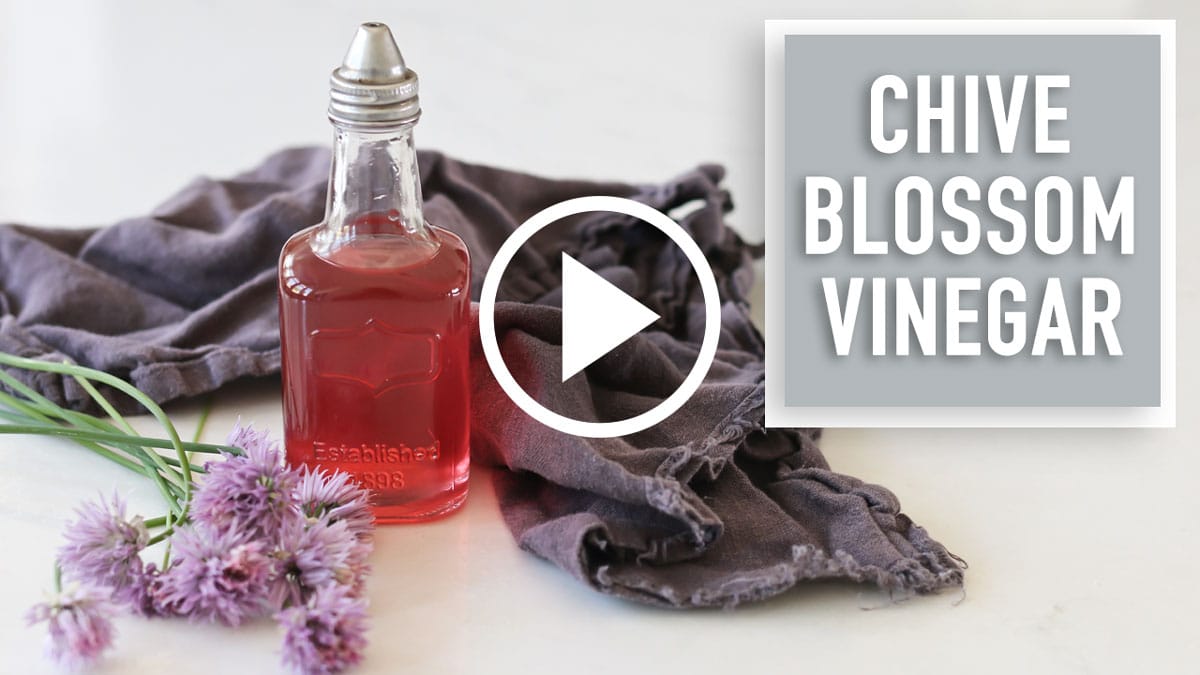
Table of contents
Can You Eat Chive Blossoms?
You may be used to seeing chive leaves chopped up and used as a garnish, but did you know that the chive flowers are edible as well? It’s true! Chives are part of the allium plant family which includes garlic and onions. The stems, leaves and flowers of the chive plant are all edible and have a lovely, mild onion flavor.

Chive blossoms themselves can be used as a garnish to flavor various dishes. The blossoms contain a unique and delicate onion/floral flavor blend that I think tastes amazing! I have used chive blossoms as a garnish for salads, potato dishes and scrambled eggs. Of course, my favorite way to use chive blossoms has got to be in this chive blossom vinegar.
What is Chive Blossom Vinegar?
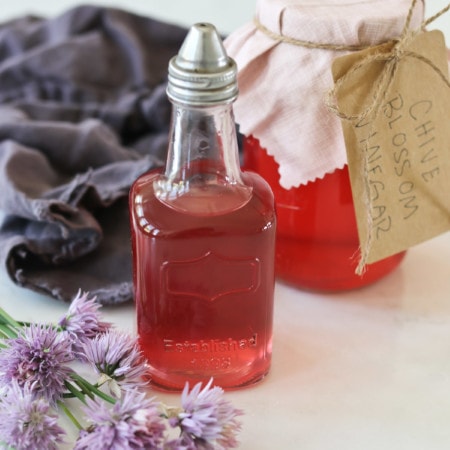
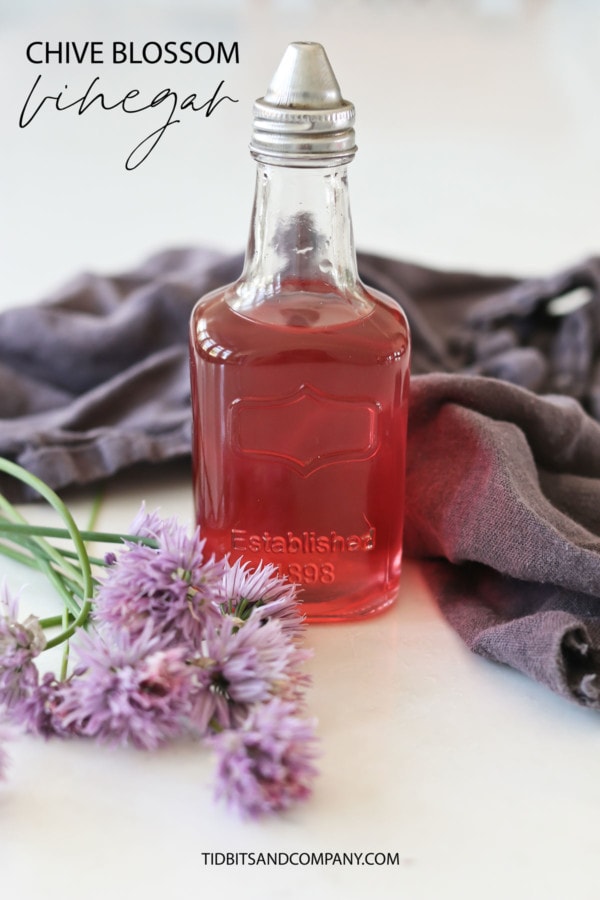
Chive blossom vinegar is a vinegar infusion made of white vinegar (I like to use white wine vinegar) and chive blossoms. The chive flowers are soaked in vinegar for a couple of weeks while the flavor and color of the chive blossoms infuse into the vinegar. What you are left with is a beautiful pinkish-purple vinegar with delicious chive flavoring.

Chive Blossom Vinegar Uses
You can use chive blossom vinegar in many ways. Try mixing it with olive oil and spices for a homemade vinaigrette salad dressing. Use it mixed with oil and a sprinkle of salt to sauté vegetables or grill meat. Add it to your next marinade for great flavor. This vinegar would taste fantastic in your next potato salad. You can even use this chive blossom vinegar to pickle vegetables with a subtle onion flavor.
Basically, anywhere you use regular vinegar, you can use chive blossom vinegar for an awesome extra flavor addition!
Chive blossom vinegar is beautiful and unique! Try packaging it up into small decorative bottles for gifting. It would make a wonderful neighbor or hostess gift for anyone who likes to cook.
Supplies and Ingredients
To make this chive blossom vinegar you will need the following:

- Chive blossoms
- White vinegar (I used white wine vinegar. You can also use champagne vinegar or any white vinegar that you like. You could also use apple cider vinegar or red wine vinegar, but these may yield a different taste and color due to the different vinegar base.)
- Glass jars (I used mason jars)
- A spoon or utensil for crushing flowers (optional)
- A fermentation weight (optional)
- Plastic, rubber or cork jar lid
Vinegar is corrosive to metal. If you don’t have a plastic lid or other non-metal lid for your jar, try placing parchment paper or plastic wrap between the jar and lid before tightening. This should help prevent the vinegar from coming into contact with the metal lid and causing corrosion.
- A label for noting the finish date of your vinegar infusion
- A sieve for straining blossoms and stems from the vinegar
- Clean jars and lids for finished chive blossom vinegar
Step-by-Step Vinegar Infusion Process
Now, let’s talk about the process of making this amazing chive blossom vinegar!

- First, collect your chive blossoms. For best flavor, look for flowers that are in full bloom and have not started to wilt.
- Clip the chive blossoms off the stems. You can preserve the stems to use as a garnish or to add to your infusion for extra chive flavor.
- Next, thoroughly rinse your chive blossoms. You’ll want to get out any dirt or bugs that may be hiding amongst the blooms.
- After washing, dry your chive blossoms. I used a salad spinner to speed up this process, but you can also just lay them on a paper towel until completely dry.
- After drying, add your chive blossoms to a clean glass jar. I like to use a quart or pint-sized mason jar.
- Add enough vinegar to cover the blossoms.
- Next, I like to crush the chive blossoms against the bottom and sides of the jar a bit to help them release their flavor.
- If desired, add some chive stem or leaf clippings for extra flavor.
- Add a fermentation weight if desired.

- Next, seal your jars using nonmetal lids or a barrier between the jar and metal lid.
- Label your vinegar infusion with the approximate finish date so that you remember when it should be done.
- Lastly, store your chive blossom vinegar in a cool dark place and allow it to infuse for about two weeks.
- Check your infusion after two weeks and taste test it. If you’re happy with the results, strain the vinegar through a sieve to remove the chive blossoms and any chive pieces. (If desired, you can allow your vinegar infusion to sit for up to three weeks for stronger flavor.)
- Pour your strained vinegar into clean, air-tight jars and enjoy!

How to Store Your Chive Blossom Vinegar Infusion
I recommend that you store your vinegar infusion in a glass jar. Label it with the date and store your vinegar in a cool place away from direct sunlight. Your chive blossom vinegar should be good for several months. To keep your vinegar fresh even longer, you can also store it in the refrigerator.

And there you go! You’ve got some fabulous chive blossom vinegar that tastes as good as is looks! If you’ve got some chives growing in your herb garden, you should definitely give this recipe a try. It’s the perfect late spring/early summer project to get your garden season rolling. Don’t forget to comment and tell me how it turns out for you!
More About Herbs
If you love herbs, then please see my past articles for more information about amazing herbs and how to use them. You can also join me at the Herbal Academy for classes on herbs and natural living. I’ve got more herbal content coming your way, so be sure to check back soon!
- The Study of Medicinal Herbs – Learn with Me!
- Dandelion Root Benefits – Nature’s Secret Remedy
- How to Harvest Dandelions
- How to Make a Nourishing Roasted Dandelion Root Tea
- Natural Cold and Flu Remedies that You Can Make at Home with Herbs
Chive Blossom Vinegar
Ingredients
- Chive blossoms
- White wine vinegar
Instructions
- Collect your chive blossoms. For best flavor, look for flowers that are in full bloom and have not started to wilt.
- Clip the chive blossoms off the stems. You can preserve the stems to use as a garnish or to add to your infusion for extra chive flavor.
- Thoroughly rinse your chive blossoms. Remove any dirt or bugs from the flowers.
- After washing, lay your chive blossoms on a towel and allow them to dry completely.
- After drying, add your chive blossoms to a clean glass jar. I like to use a quart or pint-sized mason jar.
- Add enough vinegar to cover the blossoms.
- Crush the chive blossoms against the bottom and sides of the jar a bit to help them release their flavor.
- If desired, add some chive stem or leaf clippings for extra flavor.
- Add a fermentation weight if desired.
- Seal your jars using nonmetal lids or a barrier between the jar and metal lid.
- Label your vinegar infusion with the approximate finish date so that you remember when it should be done.
- Store your chive blossom vinegar in a cool dark place and allow it to infuse for about two weeks.
- Check your infusion after 2 weeks and taste test it. If you're happy with the results, strain the vinegar through a sieve to remove the chive blossoms and any chive pieces. (If desired, you can allow your vinegar infusion to sit for up to three weeks for stronger flavor.)
- Pour your strained vinegar into clean, air-tight jars and enjoy!











Discover more TIDBITS
Love this article? Make sure to connect with me on your favorite social platform below, and leave a comment so we can chat!