
This post may contain affiliate links, which means I get a small percentage of the sale at no extra cost to you. I only recommend items I love and have had a positive experience with. Thank you!
The best way to enjoy the ancient grain spelt! Make this 3-ingredient rustic artisan loaf of 100% whole grain spelt sourdough bread.

If you have ever wanted to try your hand at baking with 100% whole grain sourdough bread, this is the recipe to try! Of all the whole grains, I have found spelt to be the easiest to succeed at when baking an artisan loaf, made from 100% whole grain flour.

A few simple ingredients are all you need to make this healthy, delicious spelt sourdough bread loaf. Doesn’t that sound nice? Let’s make it happen!
Table of contents
- What Grains to Use for Whole Wheat Sourdough Breads
- Why Use Spelt Flour for Your Sourdough Bread
- Printable Whole Grain Spelt Sourdough Bread Recipe Card
- Where to Buy Ingredients and Supplies
- Ingredients
- How to Make Whole Grain Spelt Sourdough Bread
- Tips for Making Whole Grain Sourdough Bread
- FAQ’s
- Want More Bread Recipes?


What Grains to Use for Whole Wheat Sourdough Breads
When it comes to using 100% whole wheat for your sourdough breads, there are many to choose from. Each grain needs different ratios of the ingredients, so it is important to understand the grain specific function, taste, and performance. This is why I have different recipes for each grain.
- Hard white or hard red grain
- Because of the high content of the gluten forming protein, these grains make a great yeast or sourdough bread. I have found using hard red or white grains in artisan breads makes a dense bread, but extremely filling and hearty.
- Einkorn grain
- The gluten formation of einkorn is very delicate and will yield a very dense loaf of artisan bread. However, as far as taste goes, this one is my absolute favorite! I love the nutty and buttery flavor! It is also the easiest to make because you don’t really have to stretch and fold with einkorn.
Why Use Spelt Flour for Your Sourdough Bread
If I want a whole wheat sourdough bread with the closest crumb, texture and lightness to white flour – I go for spelt. Of course, it won’t look and taste the exact same, but I find it to be the easiest of the whole grains to swap 1:1 for white flour in your recipes.

Spelt tends to be lighter and has a fantastic gluten structure so it stretches and folds very nicely, giving you those lovely airy holes in your sourdough bread. The gluten will break down faster than the hard white and red varieties, but I haven’t had any negative results from the amount I work it in this recipe.
Spelt, to me, has a milder taste than the other grains, which is another reason it is a great one to swap for white flour, which lacks most the nutrients we get from freshly milled whole grains.
I always recommend freshly milling your grains right before baking to get the best tasting and most nutritious loaf of bread. Read more about the benefits of freshly milling your grains at home.
Printable Whole Grain Spelt Sourdough Bread Recipe Card
Be sure to print this recipe and stick it in your cookbook! I’ll show you the steps to making the bread below.
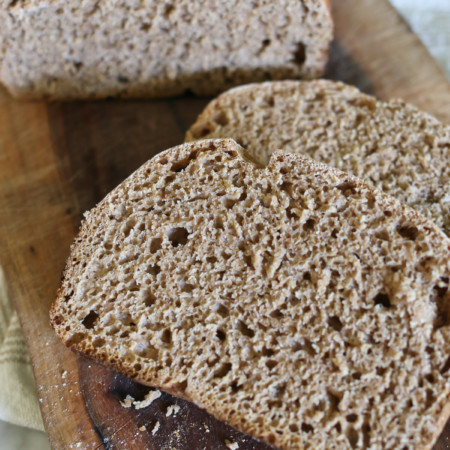
100% Whole Grain Spelt Sourdough Bread
Ingredients
- 475 grams freshly milled spelt
- 400 grams non chlorinated water
- 100 grams active and bubbly sourdough starter
- 15 grams of salt
Instructions
Preparation
- Make sure you have an active and bubbly sourdough starter. This means it is at its peak rise after feeding. Depending on the temperature of your environment, it could be anywhere from 4-8 hours before you mix up your bread.
Making the Dough
- Place a large bowl on your scale and measure out the flour and water. Mix these ingredients until just combined. You may use your hands or a sourdough whisk, just try to avoid over mixing at this point.
- Cover and let the dough rest and fully hydrate (autolyze) for 30 minutes to an hour.
- Weigh your salt and sourdough starter, and add this to the dough, mixing thoroughly with your hands. Stretch and fold the dough at least 4 times. Let rest another 30 minutes.
Stretch and Fold Process
- Complete at least 6 stretch and folds before allowing your dough to bulk ferment. You can choose to do this about 20 minutes apart, or 15 minutes apart for the first 3 stretch and folds, followed by 3 more stretch and folds every 30 minutes. As you continue this process, you will notice the dough getting more stretchy and more pliable each time.
First Bulk Fermentation Process
- After the completion of all 6 stretch and folds, cover your dough with plastic wrap or a damp tea towel, and allow to rise and ferment in a warm place until about doubled in size. This may take up to 8 hours, or less in a warm environment. Watch it carefully so it does not over-ferment and begin to collapse.
Shaping the Dough
- Lightly flour or wet your surface and scrape dough onto your prepared surface. Stretch the edges out until you have formed a square-ish shape with your dough. Be careful not to overwork the dough and release all the air from the stretch and fold process.
- Fold in your dough from top to bottom and then from side to side. Flip over and proceed to form your dough into a ball and spinning or scraping it gently against the countertop to seal the folds.
- Let it sit for a bit while you prepare your bowl or banneton basket. To do this, flour the linen liner or a tea towel, and press the flour into the fibers of the cloth. You can use whole wheat flour for this, but I like to use all-purpose flour or rice flour, as it works a little better to help it not stick to the dough. If using a tea towel, place it inside a bowl, suited for the shape of bread you are making.
- Flip your dough upside down into the prepared bowl. Pinch together any seams. Cover with plastic wrap, insert inside a plastic grocery bag, or cover with the bowl covers.
Second Bulk Fermentation Process
- Let your covered dough sit inside the fridge for up to 10 -14 hours in the refrigerator. You will know when it is proofed sufficiently when you press in with your finger and it slowly bounces back.
Baking Your Sourdough Bread
- Place a covered dutch oven into your oven and allow it to preheat together at 475 degrees Fahrenheit. It is best to let it heat up for about 45 minutes to an hour. This gets it very hot and ready to help your bread rise quickly.
- When you are ready to bake, take your dough out of the fridge and flip over onto some parchment paper. Score with a razor. Do at least one deep score, but feel free to get creative with shallow scoring for more detailed designs. You can also dust it with more flour previous to scoring to have your designs be more prominent.
- Remove your dutch oven from your oven, and carefully place dough with parchment paper inside, and cover with the lid.
- Bake for 25 minutes, covered at 475 degrees.
- Remove the lid, lower temperature to 425 degrees, and bake for another 15 minutes.
- Once done baking, remove bread and allow to cool completely before slicing into the bread.
Where to Buy Ingredients and Supplies
If you’re in need of some excellent spelt wheat, I recommend these organic spelt wheat berries from Azure Standard or this Grand Teton brand from Amazon. Both are fabulous!
To make your bread making simple, I’ve grouped these ingredients, plus my favorite equipment and supplies together over on my Moonsift bread making supplies page. Check it out for links and full details!
Ingredients
Here is what you’ll need to get started on your delicious spelt sourdough loaf. Please note that these measurements are weighed in grams, rather than measured with cups. Weighing the ingredients allows you get more accurate and consistent results, so grab that food scale.
- 475 grams freshly milled spelt
- 400 grams non chlorinated water
- 100 grams active and bubbly sourdough starter
- 15 grams salt
How to Make Whole Grain Spelt Sourdough Bread
Preparation
Make sure you have an active and bubbly sourdough starter. This means it is at its peak rise after feeding. Depending on the temperature of your environment, it could be anywhere from 4-8 hours before you mix up your bread.
Just before making the dough, mill your spelt so that your whole grain spelt flour will be nice and fresh. You’ll want as many essential vitamins, minerals and nutrients in your loaf as possible.


Making the Dough
Place a large mixing bowl on your scale and measure out the flour and water. Mix these ingredients until just combined. You may use your hands or a sourdough whisk, just try to avoid over mixing at this point.


Cover and let the dough rest and fully hydrate (autolyse) for 30 minutes to an hour.


Weigh your salt and starter, and add this to the dough, mixing thoroughly with your hands.


Stretch and fold the dough at least 4 times. Let rest another 30 minutes. Wet hands help the dough not stick to your hands.
Stretch and Fold Process
Complete at least 6 sets of stretch and folds before allowing your dough to bulk ferment. You can choose to do this about 20 minutes apart, or 15 minutes apart for the first 3 stretch and folds, followed by 3 more stretch and folds every 30 minutes. As you continue this process, you will notice the dough getting more stretchy and more pliable each time.


First Bulk Fermentation Process
After the completion of all 6 stretch and folds, cover your dough with plastic wrap, a damp towel or reusable bowl covers, and allow to rise and ferment in a warm place until about doubled in size. Watch it carefully so it does not over-ferment and begin to collapse.
Shaping Your Dough
Lightly sprinkle with flour or wet your work surface. Scrape the dough onto your prepared surface. Stretch the edges out until you have formed a square with your dough. Be careful not to overwork the dough and release all the air from the stretch and fold process.
Fold in your dough from top to bottom and then from side to side. Flip over and proceed to form your dough into a ball and spinning or scraping it gently against the countertop to seal the folds.
Let it sit for a bit while you prepare your bowl or banneton basket. To do this, flour the linen liner or a tea towel, and press the flour into the fibers of the cloth. You can use whole wheat flour for this, but I like to use all-purpose or rice flour as it works a little better to help it not stick to the dough. If using a floured tea towel, place it inside a bowl, suited for the shape of bread you are making.


Flip your dough upside down into the prepared bowl. Pinch together any seams. Cover with plastic wrap, insert inside a plastic grocery bag, or cover with the bowl covers.
PRO TIP! I prefer to use rectangle banneton baskets and rectangle dutch oven pan loaves. The shape tends to force the dough up, instead of out, when rising and cooking.
Second Bulk Fermentation Process
Let your covered dough sit and proof inside the fridge for up to 10 -14 hours in the refrigerator. You will know when it is proofed sufficiently when you press in with your finger and it slowly bounces back.
Baking Your Sourdough Bread
Place a covered dutch oven into your oven and allow it to preheat together at 475 degrees Fahrenheit. It is best to let it heat up for about 45 minutes to an hour. This gets it very hot and ready to help your bread rise quickly.
When you are ready to bake, take your dough out of the fridge and flip over onto a piece of parchment paper. Score the top with a razor. Do at least one deep score, but feel free to get creative with shallow scoring for more detailed designs. You can also dust it with more flour previous to scoring to have your designs be more prominent.

Remove your dutch oven from your oven, and carefully place dough with parchment paper inside, and cover with the lid. You can add a couple of ice cubes underneath the parchment paper to help create steam, which can help the bread rise up better.
Bake for 25 minutes, covered at 475 degrees.
Remove the lid, lower temperature to 425 degrees, and bake for another 15 minutes.

Once done baking, remove bread and allow to cool completely before slicing into the bread.

Tips for Making Whole Grain Sourdough Bread
- The fresher your flour is from the mill the better it will be in both taste and nutrition. That’s why I love to grind my own flour, and I prefer to grind it to a very fine texture.
- If you want to double this recipe, I suggest keeping the ingredients in separate bowls, and just making them at the same time. You want to ensure each loaf has the appropriate measurements, which you can’t always guarantee if you just cut them in half. That said, I also break this rule and do it all in one bowl! Haha!
- This recipe makes 1 loaf, equal to approximately 10 servings. If you won’t finish it within a week, slice it up and freeze individual slices for some quick delicious toast.
FAQ’s
I prefer the lightness and gluten structure of spelt for sourdough bread. It is the easiest to work with if you are used to making bread with white flour.
For other whole grain varieties, I have other recipes with different measurements and processes that suit that grain best. They all just need a little adjustments to the quantities to turn out just right.
I have found storing the bread in beeswax lined linen bags to be the best way to keep it fresher longer.
Want More Bread Recipes?
I hope you enjoyed this whole wheat sourdough spelt bread recipe. Once you’ve done it a couple times it will be your new favorite way to make bread. (At least, it is for me. I’m a bit obsessed with sour dough!)
If you want to try some other great bread recipes, check out:











Discover more TIDBITS
Love this article? Make sure to connect with me on your favorite social platform below, and leave a comment so we can chat!